Reviews
Part of Qualitative research: the practical version
Qualitative research examples: the patterns that repeat
Nine qualitative research examples, from GOV.UK journey interviews to B2B buying group sessions, and the patterns that repeat across all of them.
What to take away
- Nine study types cover most small-team questions. The first five: onboarding, cancellation, pricing language, support handoffs, and retail choice.
- The other fourB2B buying groups, accessibility, trust after an incident, and launch.
- Named examples include Lucy Suchman's Xerox copier study, GOV.UK's journey interviews, Julian Orr's Xerox technician ethnography, IDEO's shopping cart project, and Clayton Christensen's milkshake research.
- OthersRobinson, Faris, and Wind's buying center, GOV.UK's disabled research guidance, trauma-aware inquiry practice, and Genevieve Bell's Intel home ethnography.
- The same four patterns recur in every onepick participants on purpose, watch behavior as well as ask about it, keep interpretation separate from what was said, and treat findings as mechanisms rather than rates.
- GOV.UK's Service Manual publishes two of these designs in full and is free to read; NIST and W3C supply the privacy and accessibility checks that sit alongside them.
- Every study needs a written record of sponsor, recruitment, dates, guide, and analysis. Add limits before anyone quotes a finding.
These qualitative research examples are study designs and published studies, not reports about named clients. Each one names the pattern it shares with the others.
1. Reconstruct a breakdown: Lucy Suchman's Xerox copier study
Lucy Suchman's 1987 book Plans and Situated Actions documents her Xerox PARC observations of people using a photocopier. She found users did not follow the designed plan; they acted from the situation in front of them.
Interview recent completers and non-completers, then observe selected attempts. Compare expectations, sequence, workarounds and device context. The pattern: the barrier people remember is rarely the most common one, so pair recall with observation before you act.
2. Understand cancellation decisions
GOV.UK's researching user experiences method reconstructs an experience through events, sequence, actions, thoughts and feelings. The cancellation study borrows that timeline logic but not its public-service participant counts, which do not transfer to commercial sampling.
Invite recent leavers through a channel you are authorized to use. Journey interviews surface triggers, alternatives, prior support and timing. Keep polite cancellation language separate from your reading of it.
3. Learn pricing vocabulary: Clayton Christensen's milkshake study
Clayton Christensen's milkshake research, described in Competing Against Luck, observed and interviewed buyers at a fast-food chain. Morning customers bought shakes to make a long drive more interesting, not to satisfy hunger. That job changed the product and marketing mix.
Interviews show how buyers describe value, risk, budget ownership and tradeoffs. The pattern: vocabulary is a finding, willingness to pay is not. Test the words in later quantitative work rather than treating a statement as a demand estimate.
4. Diagnose support handoffs: Julian Orr's Xerox technician ethnography
Julian Orr's Talking About Machines (1996) is an ethnography of Xerox copier technicians. He found they repaired machines by sharing stories, not by following manuals alone. Interruptions and workarounds were central to the job.
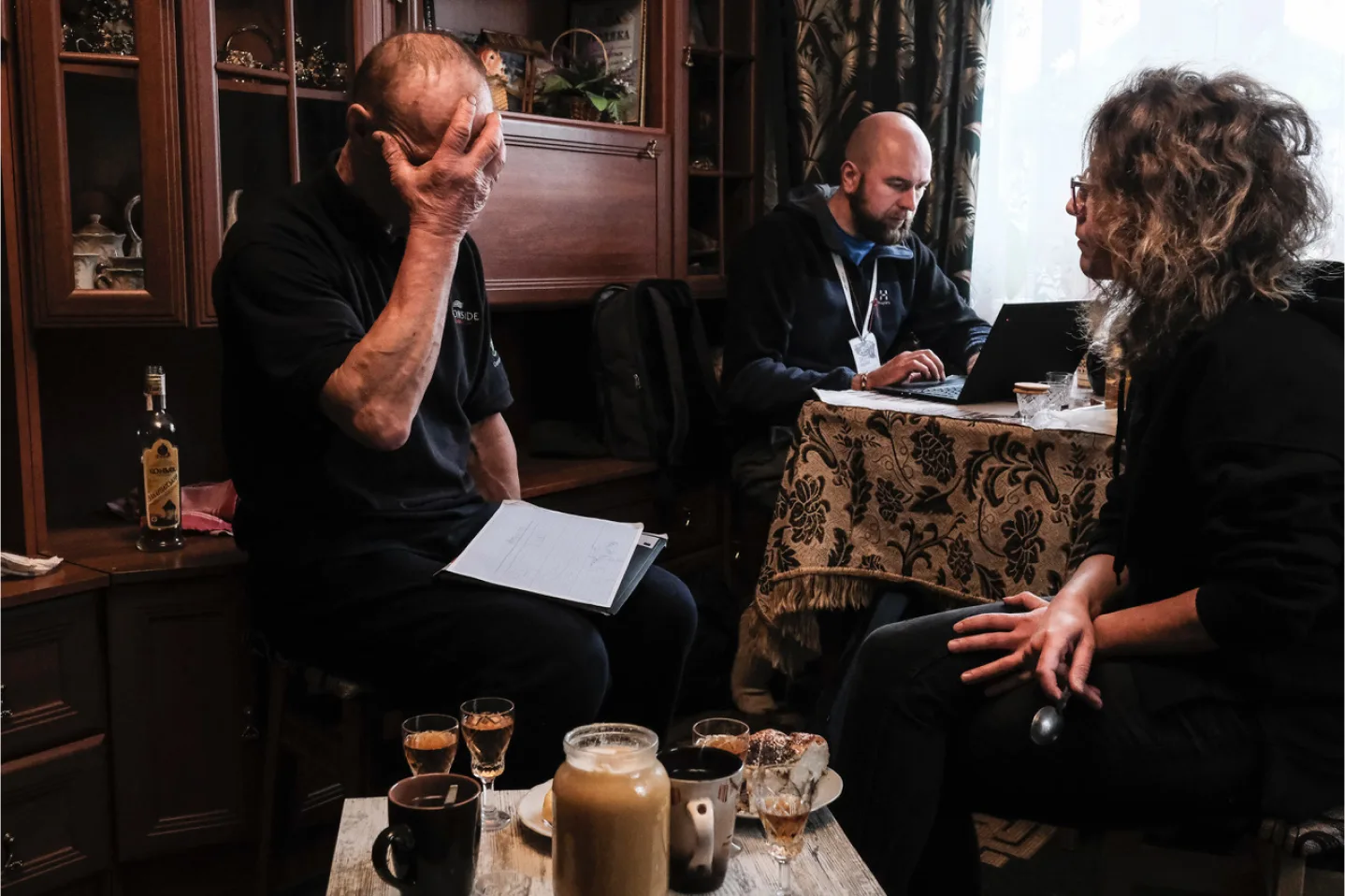
GOV.UK's contextual research and observation guidance shows how watching work in its familiar setting exposes real equipment, documents, interruptions and workarounds. It also warns that questions can change behavior, so record visible action separately from interpretation and note the observer's influence.
Observe authorized workflows, then interview customers and staff apart from each other. Map systems, interruptions, repeated explanations and exceptions. Protect employees from retaliation and keep customer records out of the notes.
5. Study a retail choice: IDEO's shopping cart project
IDEO's 1999 shopping cart project, filmed for ABC Nightline's The Deep Dive, sent a team to observe shoppers and interview a cart expert. The redesigned cart came from that field work.
Combine accompanied shopping with a short retrospective interview. Record environment, comparison, uncertainty and who else was present. The pattern: observed visits are cases, not a conversion funnel.
6. Map a B2B buying group: Robinson, Faris, and Wind's buying center
Robinson, Faris, and Wind's 1967 book Industrial Buying and Creative Marketing introduced the buying center. It named roles such as users, influencers, deciders, buyers, and gatekeepers.
Interview users, technical evaluators, economic buyers, procurement and former prospects. Compare role-specific criteria and name the voices missing from the room. One organization never represents a sector.
7. Review accessibility barriers: GOV.UK's disabled research guidance
GOV.UK's Service Manual publishes guidance on researching with disabled people. It says to pay participants, offer preferred communication and assistive technology, and run sessions in accessible settings.
Pay people with relevant access needs to complete realistic tasks and describe the experience. Offer preferred communication and assistive technology. Fix what you observe, then run formal accessibility testing. The pattern: lived experience finds barriers, standards confirm them.
8. Explore trust after an incident
Use trauma-aware individual interviews with clear voluntary participation and support routes. Examine information needs and repair expectations without pressing for personal detail. The pattern: research into trust is not reputation management, and it should not be run by the team being judged.
9. Follow an early product launch: Genevieve Bell's Intel home ethnography
Genevieve Bell's late-1990s Intel research used home visits and interviews across Asia, Europe, and the US. It showed that family routines and space shaped technology use, which changed Intel's product plans.
Participant diaries plus periodic interviews capture changing expectations, use contexts, workarounds and abandonment. Preserve time order, then test later hypotheses against product evidence or a suitable survey.
The patterns that repeat
Across all nine, four habits do the work. Participants are chosen for what they can show, not for how many they are. Behavior is watched as well as described. Interpretation is logged apart from the raw account. Findings are handed forward as mechanisms for a later test, never as prevalence.
For every study, record these details:
Study record
- sponsor
- recruitment
- setting
- dates
- guide
- duration
- recording
- sample
- analysis
- negative cases
- limits That record exposes weak method fit before a stakeholder does.
Example design map
Primary evidence
- Why a journey breaks
- Timeline interview plus selected observation
- How roles disagree
- Role-specific case interviews
- How context changes use
- Observation or diary evidence
- What to test next
- Themes, exceptions, mechanisms
Claim boundary
- Why a journey breaks
- No prevalence estimate
- How roles disagree
- No single buyer persona
- How context changes use
- No universal behavior claim
- What to test next
- Separate outcome test required
Turn examples into test cases
The NIST Privacy Framework starting guide sets out a voluntary process for identifying and managing privacy risk. Use it to assign owners for participant data and responses; it is not legal clearance.
The W3C information and relationships explanation says visual structure and relationships should also be available to assistive technology. Apply that check to research outputs, then test the page with the users and technology in scope. Teams planning these studies still need to settle which qualitative research questions to answer before fieldwork starts.
Common questions
Are these real qualitative research examples?
They are study designs drawn from published method guidance and published studies, not reports about named clients or participants. Named examples include Lucy Suchman's Xerox copier study and Julian Orr's Xerox technician ethnography.
Can one study combine interviews and observation?
Yes, when each source is authorized and answers a defined part of the question. Keep what each source measures separate, and record where the two disagree.
What should happen after one of these studies?
Log the decision the study informed, then choose the next method that fits: a survey for prevalence, an experiment for causality, usability testing for interface problems.
How many participants does a qualitative study need?
Enough to cover the variation you care about, which depends on the question and the population. GOV.UK's published counts suit public services; commercial work usually needs its own justification, written down before recruitment.