Careers
Part of Making sense of market research strategy (2027 update)
A market research strategy checklist built for real conditions
A market research strategy checklist for small teams: scope the decision, audit evidence, plan samples and ethics, then pilot before you field.
What to take away
- Write the decision, its owner and its deadline first. A study that cannot change a choice is a cost, not research.
- Audit what you already know before you buy data. Internal records and Census or BLS figures are free and often sufficient.
- Predefine the analysis and the sample size logic before fielding. Otherwise you fit the story to whatever comes back.
- Keep research contact separate from promotion. A participant list that becomes a lead list breaks the consent it was collected under.
- Mark every control pass, fail, unknown or not applicable, with an owner and a review date.
A market research strategy earns its cost by informing one named decision. Start there, not with a method.
Define the decision before the method
Write the decision, who makes it, the deadline, and the alternatives already on the table. Note the minimum evidence that would change the answer.
Then bound the market: category, geography, period, channel and the substitutes a buyer would actually consider. Facts, forecasts and assumptions go in separate columns, each versioned.
Audit evidence you already hold
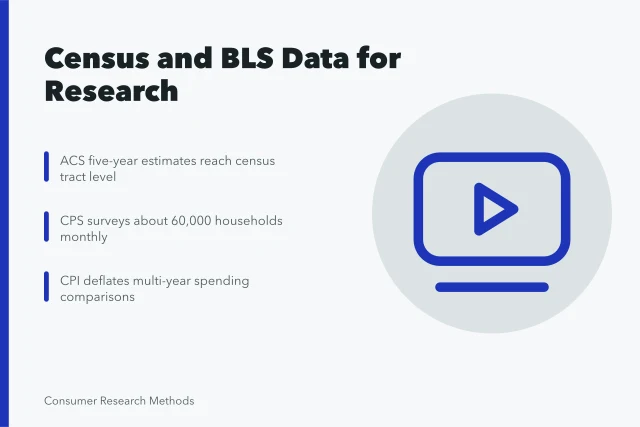
List internal records, earlier studies, official statistics and competitor material, then grade each by source, date and method. The U.S. Census Bureau's Statistical Quality Standards show how a statistical product is planned, collected, processed and documented. Read them as a discipline to borrow, not a certification to claim.
Rank your open questions by uncertainty and consequence. The top two or three justify primary work. The rest wait.
Map the population and the ethics
Map users, buyers, payers, gatekeepers, former customers and the groups you are excluding. Recruitment, accessibility, incentives and withdrawal terms follow from that map.
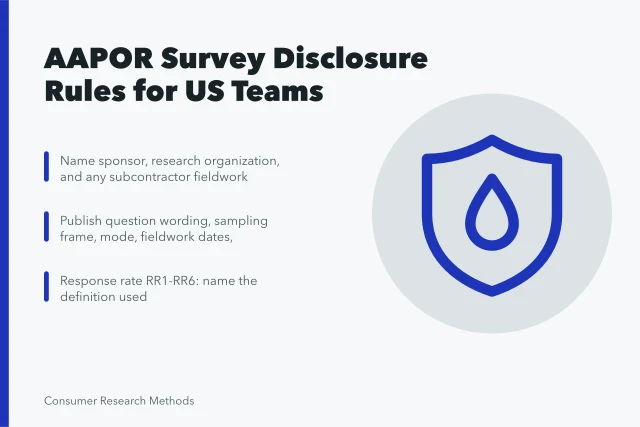
AAPOR's Code of Professional Ethics and Practices sets duties to the public, sponsors, the profession and participants. It does not replace law or guarantee quality. For consent language and review in US studies, compare your plan against these consumer research ethics guidelines.
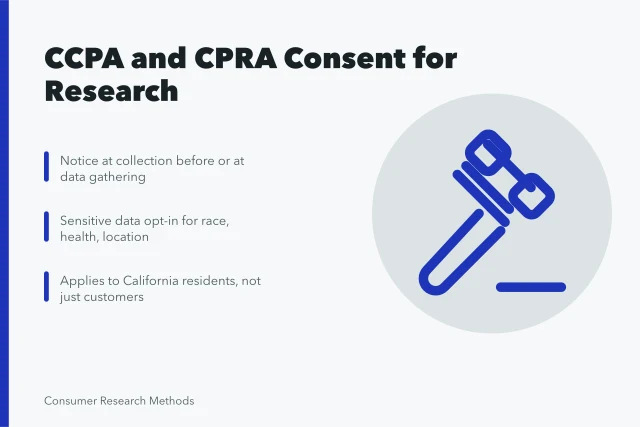
Where the study touches regulated data, name the rule and take advice from qualified counsel. Do not treat a checklist as a legal opinion.
Control the sample and the fielding
State the target population, the frame you will draw from, and how selection works. Quotas, weighting and expected nonresponse belong in the plan, not in the apology.
Pilot the instrument on a small representative group. Fix wording, translation and routing before the full field. A leading question caught in a pilot costs a morning; caught after fielding it costs the study.
Predefine the analysis
Fix the units, the codebook, the primary comparisons and how you will treat missing data before collection ends. Open-ended coding collapses under volume, so decide the frame early.
Findings should separate what participants said, what you observed, and what you concluded. Keep minority experiences visible rather than averaged away.
Separating research contact from promotion protects the informed consent that primary market research depends on. If a participant list can become a sales list, say so in the consent or do not build it.
Worked example: a $12,000 question
A team wants to know whether to open a second location. The decision is binary, the deadline is one quarter, and the alternatives are expand, wait or test a pop-up.
| Status | Meaning | Required response |
|---|---|---|
| Pass | Current evidence supports the control | Record source and date |
| Fail | Requirement is not met | Correct before release |
| Unknown | Evidence is missing | Assign investigation |
| N/A | Outside verified scope | Record the rationale |
They audit free evidence first: foot traffic counts, local BLS wage figures, lease terms. Two questions survive. A short intercept survey plus six interviews answers both for under a quarter of the build cost.
The W3C Privacy Principles warn against shifting privacy work onto individuals. Apply that to how you collect, store and delete participant data, then check the governing law with counsel.
The CISA software acquisition fact sheet covers supply-chain exposure and vulnerability management. Add those questions when you buy a survey platform, without treating them as local approval.
Common questions
Who signs the checklist?
The research owner coordinates it. Decision, methods, participant, privacy and data owners each sign the controls they hold.
What should block fieldwork?
Lead-in: Any unresolved material issue with:
- purpose
- population
- recruitment
- consent
- harm
- accessibility
- instrument
- data security
- supplier access
- pilot or analysis
Is a checklist enough for quality?
No. It makes control status visible. Judgment, source verification, piloting and correction still decide whether the study is any good.
How much should a small team spend?
Set the budget against the value of the decision, not a benchmark. If the cheapest credible design costs more than the decision is worth, do not field it.